 Skip to content
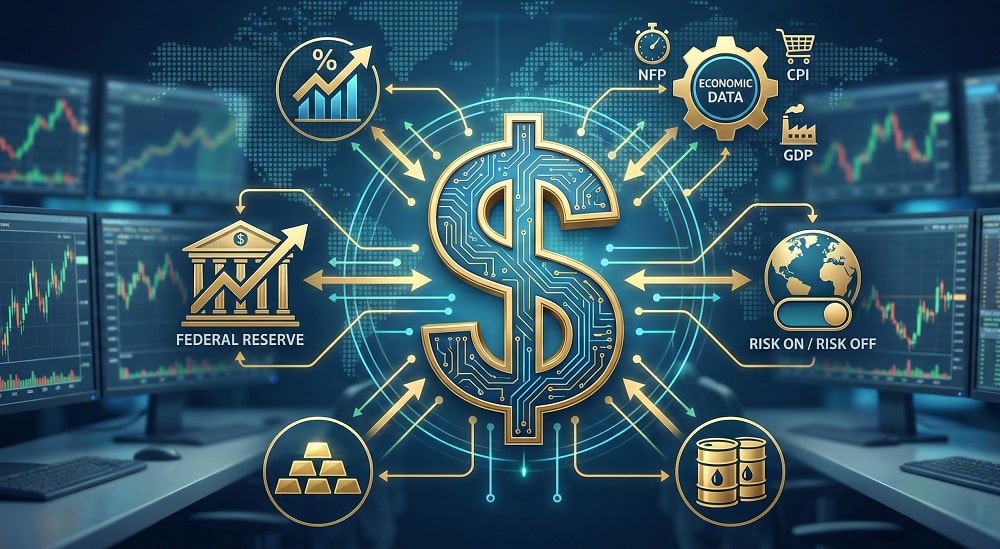

You’ve analyzed the charts. The technical setup looks perfect. You execute a buy order on EURUSD, confident in your analysis. Ten minutes later, a single red candle wipes out your stop loss.
What happened? The US Dollar moved, and it took the entire market with it.
For many traders, fundamental analysis feels like noise. But the USD is the engine of the global economy. If you don’t understand what drives it, you are trading with a blindfold on. Understanding these mechanics is exactly what separates struggling retail traders from the professionals.
At sarowarjahan.com, I help traders navigate these complex waters every day. This guide cuts through the confusion to show you exactly what moves the King of Forex.
The Engine: Why the Federal Reserve (The Fed) Controls the Trend
The Federal Reserve (The Fed) is the central bank of the United States. In the hierarchy of Forex drivers, The Fed is number one.
Their mandate is simple: keep prices stable and employment high. To do this, they control the supply of money and the cost of borrowing. When the Fed speaks, the market listens.
Interest Rates & Yields
Money flows where it gets the best return.
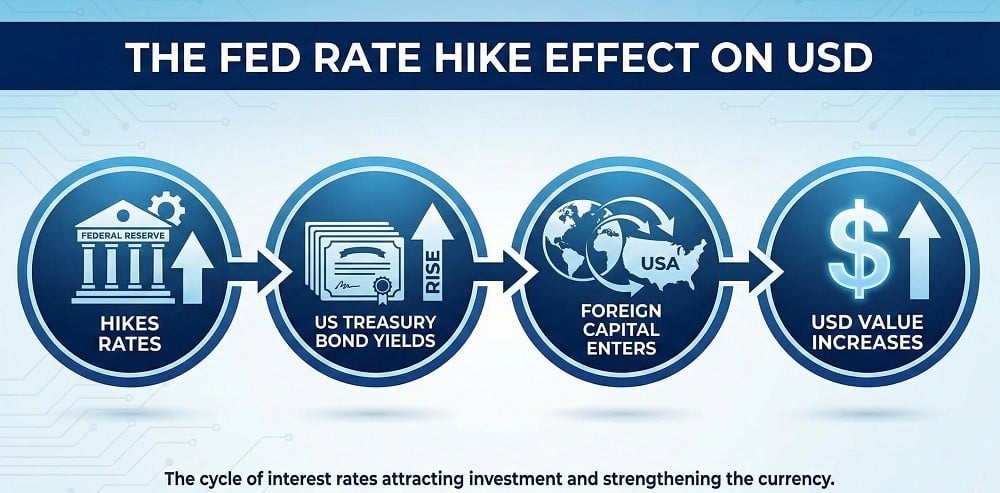
If the US interest rate is 5% and the Eurozone rate is 2%, large institutions move billions of dollars into US assets to earn that higher yield. This demand drives the value of the USD up.
- Higher Rates: Attract foreign capital → USD Stronger.
- Lower Rates: Investors seek yield elsewhere → USD Weaker.
Hawkish vs. Dovish: Decoding Central Bank Language
You will often hear traders describe the Fed Chairman, Jerome Powell, as “Hawkish” or “Dovish.” Understanding this tone is critical for predicting future rate changes.
| Feature | Hawkish Stance | Dovish Stance |
| Primary Fear | High Inflation | High Unemployment / Recession |
| Policy Action | Raise Interest Rates | Lower Interest Rates |
| USD Impact | Bullish (Buy USD) | Bearish (Sell USD) |
| Goal | Slow down the economy | Stimulate the economy |
The Fuel: High-Impact Economic Indicators You Must Watch
Not all news events are created equal. You can ignore 90% of the economic calendar. However, the following data releases act as fuel for the Fed’s decisions.
Inflation (CPI & PPI)
The Consumer Price Index (CPI) measures how much you pay for goods and services.
When inflation is hot, the purchasing power of the dollar drops. Paradoxically, high inflation often strengthens the USD on Forex charts.
Why? Because traders anticipate the Fed will fight that inflation by raising interest rates. If CPI comes in higher than expected, expect the dollar to rally.
The Jobs Report (NFP)
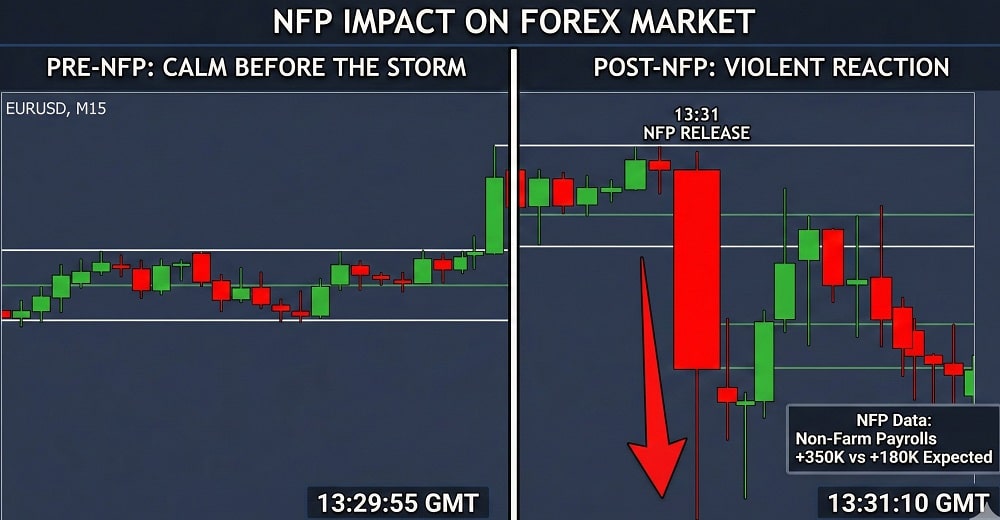
The Non-Farm Payrolls (NFP) report is the heartbeat of the US economy. Released on the first Friday of every month, it creates massive volatility.
- Strong NFP (Jobs Added > Expected): Signals a robust economy. The Fed can keep rates high. USD Bullish.
- Weak NFP (Jobs Added < Expected): Signals a slowdown. The Fed may need to cut rates. USD Bearish.
The Sentiment: Risk-On vs. Risk-Off Dynamics
Sometimes, data doesn’t matter. Fear does.
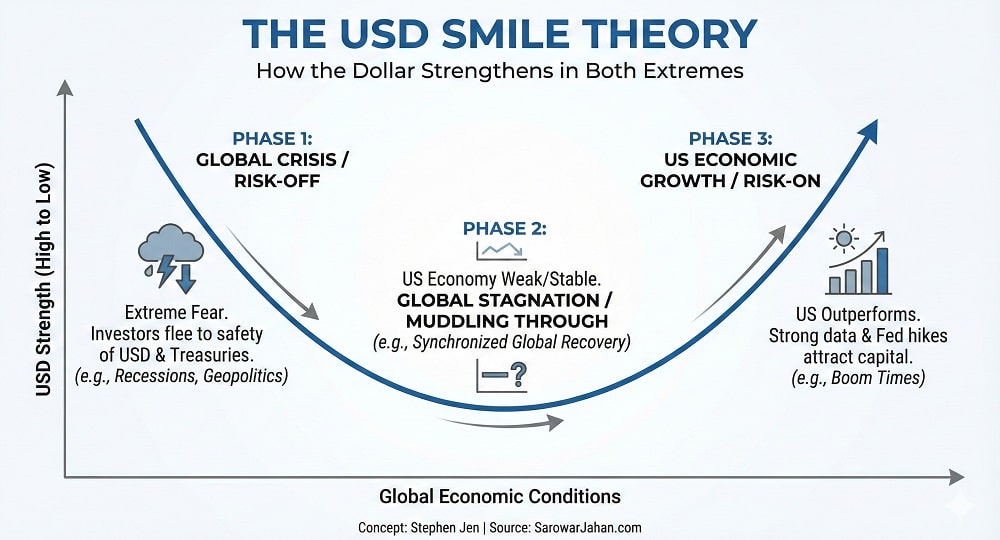
The US Dollar has a unique dual personality. It can rise when the US economy is booming, but it can also rise when the global economy is crashing. This is known as the USD Smile Theory.
The Safe-Haven Status
The USD is the world’s primary reserve currency. When geopolitical tension rises or stock markets crash, investors panic. They sell riskier assets (like stocks or crypto) and park their cash in the safety of the US Dollar and US Treasury Bonds.
If you see global panic headlines, look for Risk-Off setups:
- Sell: AUDUSD, GBPUSD (Risk currencies).
- Buy: USDCAD, USDJPY (Safe havens).
The USD Smile Theory Explained
Think of the dollar’s performance as a smile on a chart:
- Left Side (Crisis): Global recession causes fear. Investors rush to the USD for safety. USD Strong.
- Middle (Stagnation): The US economy is weak or muddling along. Investors sell USD for better growth elsewhere. USD Weak.
- Right Side (Growth): The US economy is booming and outperforming others. Investors chase US yields. USD Strong.
Inter-Market Correlations: Gold and Oil
Professional traders don’t just look at currency charts. We look at other markets that influence pricing.
- Gold (XAUUSD): Generally has an inverse correlation with the dollar. Since gold is priced in dollars, a stronger USD makes gold more expensive for foreign buyers, lowering demand. If the DXY (Dollar Index) shoots up, Gold usually drops.
- Crude Oil (WTI): Also priced in dollars. However, the correlation is complex. High oil prices can drive US inflation, which might force the Fed to hike rates, eventually strengthening the dollar.
Practical Strategy: How to Trade Fundamental News
Knowing the theory is one thing. Making money from it is another.
Trading directly during a news release is dangerous due to “slippage” where your order gets filled at a much worse price than you intended.
A Better Approach:
- Wait for the reaction: Let the initial 15-minute chaos settle after an NFP or CPI release.
- Identify the trend: Did the news confirm the long-term trend?
- Enter on the pullback: Don’t chase the candle. Wait for price to retrace to a key technical level.
This combination of fundamental awareness and technical precision is what I focus on with my fund management and signal services. You don’t have to face the volatility alone.
Frequently Asked Questions (FAQ)
How do interest rates affect the US Dollar?
Higher interest rates strengthen the USD.
When the Fed raises rates, US assets offer better returns than assets in other countries. This attracts foreign investors who must buy USD to invest, driving up demand and the currency’s value.
Does inflation make the USD stronger or weaker?
High inflation typically strengthens the USD in the short term.
While inflation erodes purchasing power, Forex markets react to the future. High inflation forces the Federal Reserve to raise interest rates to cool prices, which is bullish for the dollar.
What is the “USD Smile Theory”?
A theory explaining why the dollar strengthens in both bad and good times.
The USD strengthens during global recessions (due to safety seeking) and during strong US economic growth (due to yield seeking). It tends to weaken only during periods of moderate, synchronized global growth.
How does the NFP (Non-Farm Payrolls) report move the dollar?
It acts as a primary gauge of economic health.
A higher than expected job number suggests a strong economy, leading to a stronger USD. A lower number hints at a slowdown, often causing the USD to sell off as traders anticipate lower interest rates.
Why is the US Dollar considered a safe-haven currency?
Because of the stability and size of the US economy.
During times of war, pandemic, or economic collapse, the US Dollar is viewed as the safest place to store wealth, thanks to the depth of US financial markets and the government’s stability.
Ready to take your trading to the professional level? Visit sarowarjahan.comfor verified signal services, expert fund management, and more insights into mastering the Forex market.
Connect on Telegram Don’t miss out on critical market updates. Join my Telegram community for the latest news and trading signals delivered straight to your phone: https://t.me/mql5signals_Sarowar
