 Skip to content
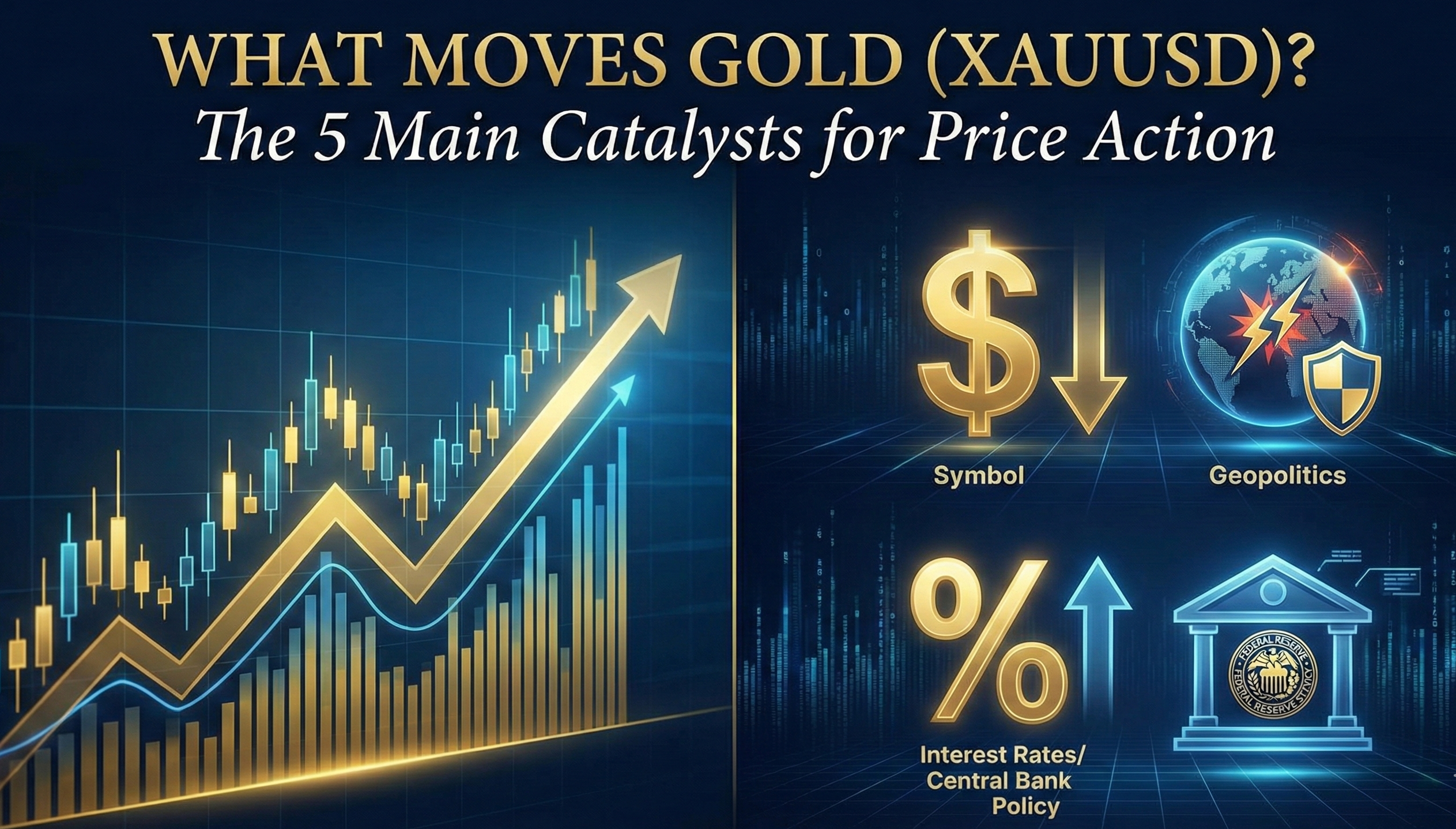

You’ve analyzed the technicals perfectly. The support level held, the RSI was oversold, and the candlestick pattern looked bullish. You entered a “Buy” on XAUUSD.
Then, within minutes, the market crashed 200 pips against you.
Why? Because Gold doesn’t just move based on chart patterns. It moves based on macroeconomic catalysts. Relying solely on technical analysis for Gold is like trying to drive a car by only looking in the rearview mirror. To trade XAUUSD profitably, you must understand the fundamental engine driving the price.
This guide breaks down exactly what moves Gold, shifting your perspective from a retail gambler to an institutional thinker.
1. The “Big Boss” Correlation: Gold vs. The US Dollar (USD)
If you only watch one indicator while trading Gold, make it the US Dollar.
Gold is denominated in dollars (XAU/USD). This creates a mathematical inverse correlation. When the dollar gets stronger, it takes fewer dollars to buy an ounce of gold, so the price of gold drops. When the dollar weakens, gold becomes cheaper for foreign investors, driving demand and price up.
Key Trading Insight:
Keep an eye on the DXY (US Dollar Index).
- DXY Bullish (Up): Expect downward pressure on Gold.
- DXY Bearish (Down): Look for Gold longs.
Note: This correlation isn’t 100% perfect. During extreme crises, both the Dollar and Gold can rise simultaneously as investors flee to safety. But 80% of the time, they move in opposite directions.

2. The Interest Rate Effect: Why The Fed Controls Your Trade
The Federal Reserve (The Fed) is effectively the central bank of the world. Their decisions on interest rates are the single biggest driver of Gold’s long-term trends.
Here is the logic:
Gold is a non-yielding asset. It pays no interest and no dividends.
When the Fed raises interest rates (a “Hawkish” stance), bonds and savings accounts start paying higher returns. Smart money leaves Gold to chase those guaranteed yields. This is the Opportunity Cost of holding Gold.
Conversely, when rates are low (a “Dovish” stance), the penalty for holding Gold disappears, and its price often soars.
Real Yields vs. Nominal Yields
It’s not just the headline interest rate that matters. It’s the Real Yield.
| Scenario | Real Yield | Impact on Gold |
| Rates are high, Inflation is low | Positive (+) | Bearish (Gold drops) |
| Rates are low, Inflation is high | Negative (-) | Bullish (Gold rises) |
3. Is Gold Actually a Hedge Against Inflation?
The common wisdom says: “Buy Gold to protect against inflation.”
The reality is more nuanced.
Gold is a hedge against the debasement of currency. If inflation is skyrocketing (CPI is high) and the Central Bank is too slow to raise rates, Gold will fly. Investors panic because their cash is losing value, so they park wealth in physical assets.
However, if inflation is high but the Central Bank acts aggressively to fight it (raising rates fast), Gold might actually fall.
The Lesson: Don’t just read the CPI (Consumer Price Index) number. Watch how the Central Bank reacts to it.
4. The “Fear Trade”: Geopolitics and Safe Haven Status
When tanks roll across borders or a pandemic shuts down the global economy, investors panic. They dump risky assets like stocks and crypto and rush into Safe Havens.
Gold is the ultimate safe haven. It has no counterparty risk—it cannot go bankrupt.
During times of “Risk-Off” sentiment (fear), Gold prices can disconnect from the Dollar and Interest Rates entirely. Logic goes out the window, and pure emotion drives the price up.
Examples of Fear Events:
- War or geopolitical escalation.
- Global banking collapses.
- Pandemic announcements.
5. Supply and Demand: The Long-Term Whales
While day traders focus on the Fed, long-term trends are supported by physical buying.
Who are the biggest buyers? Central Banks.
Countries like China, Russia, and India have been aggressively buying gold to diversify their reserves away from the US Dollar. When Central Banks are net buyers, it puts a “floor” under the gold price, making deep crashes less likely.
Secondary factors include:
- Jewelry Demand: Particularly from India (wedding season) and China (Lunar New Year).
- Mining Supply: If production costs rise, miners won’t sell cheap, restricting supply.
Frequently Asked Questions (FAQ)
Here are the specific answers to questions traders ask most often.
Does the US Dollar affect Gold prices?
Yes, they typically have a strong inverse correlation.
Since Gold is priced in USD, a stronger dollar makes gold more expensive for foreign buyers, reducing demand. A weaker dollar usually boosts gold prices.
How do interest rates impact XAUUSD?
Rising interest rates are generally bearish for Gold.
Gold pays no interest. When rates rise, investors sell gold to buy bonds that offer a guaranteed return (high opportunity cost). When rates fall, gold becomes attractive again.
Why does inflation make Gold prices go up?
Gold is used to preserve wealth when cash loses value.
When inflation erodes the purchasing power of the dollar, investors buy gold. However, this only works if interest rates remain lower than the inflation rate.
What is the biggest driver of Gold prices today?
Real Interest Rates and Federal Reserve Policy.
While war causes temporary spikes, the long-term trend is dictated by whether the Fed is tightening (raising rates) or loosening (printing money) monetary policy.
Does supply and demand affect Gold?
Yes, but it moves slower than currency factors.
Mining supply is stable, but demand fluctuates based on Central Bank purchases and jewelry consumption in key markets like India and China.
Final Thoughts: Trading with Professional Insight
Understanding these catalysts is the difference between gambling and trading. However, interpreting macro data in real-time can be difficult even for experienced traders.
You don’t have to navigate these volatile markets alone.
At Sarowar Jahan, I provide professional Fund Management and Signal Services backed by over a decade of market experience. Whether you need daily signals to guide your entries or want a managed solution for consistent growth, my goal is to help you stay on the right side of the trend.
Stop guessing. Start trading with authority. Visit sarowarjahan.com today.
