 Skip to content
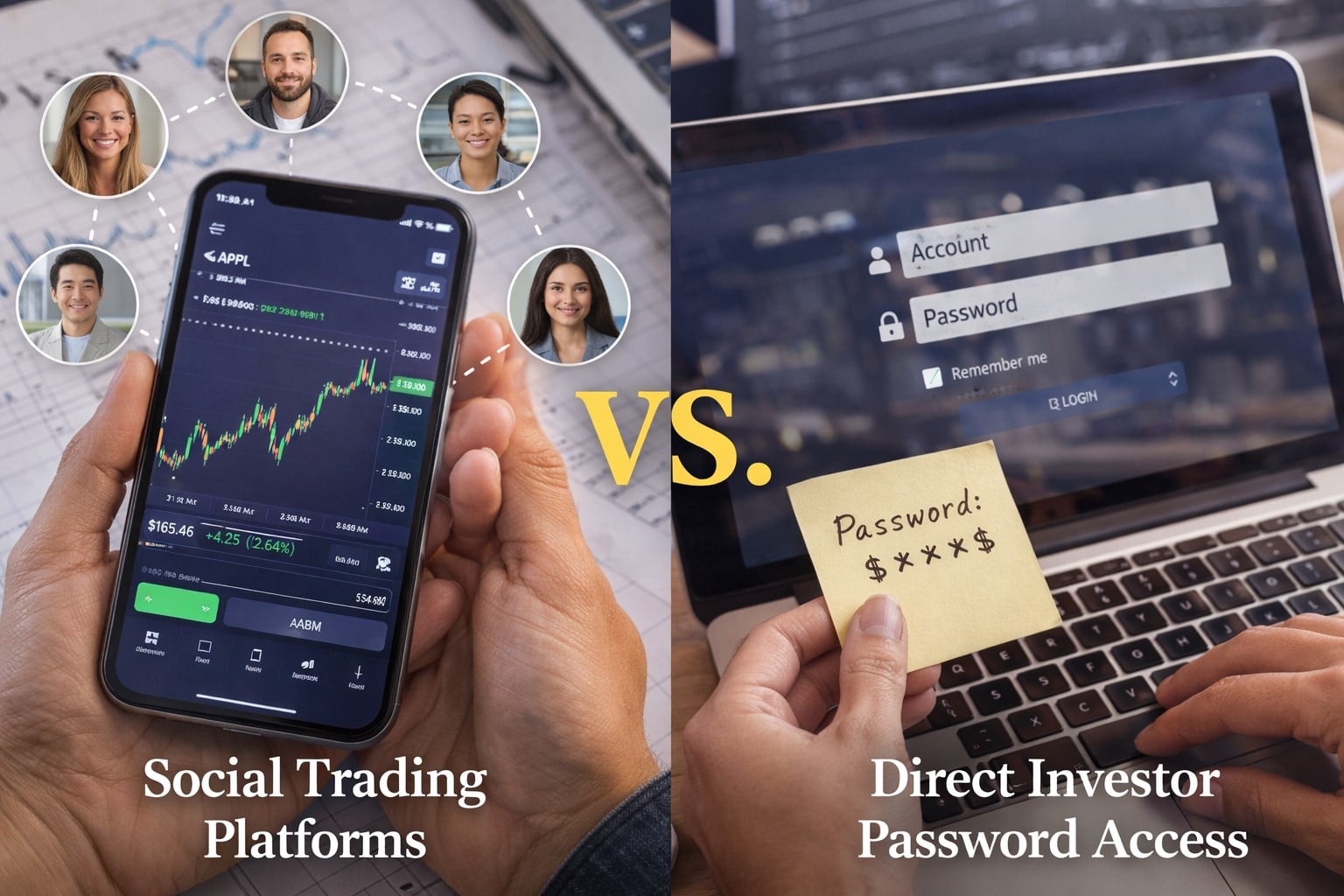

Choosing how to follow a professional trader is a high-stakes decision. You want their returns, but you also want to keep your capital safe.
Most traders start with automated social platforms only to realize that “set and forget” comes with hidden costs. Between execution lag and platform fees, your bottom line rarely matches the pro you’re following. On the other hand, direct access via investor passwords offers total transparency but requires more manual oversight.
This guide breaks down the technical architecture of both methods so you can protect your equity while maximizing your mirroring accuracy on sarowarjahan.com.
1. The Architectural Divide: Middleware vs. Direct Terminal
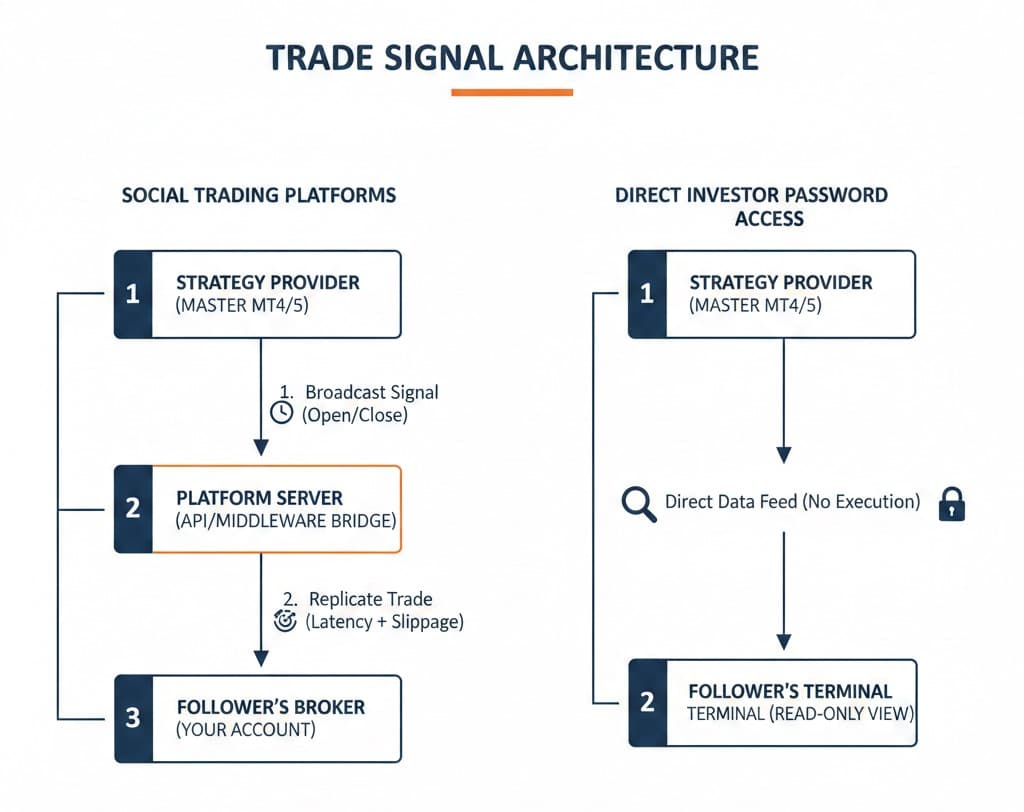
The fundamental difference lies in the “data path” your trades take.
Social Trading Platforms act as middleware. When a signal provider enters a trade, that data travels to the platform’s server before being broadcast to your broker’s Brokerage API. This “extra hop” is the primary cause of execution latency.
Investor Password Access is direct. You log into a MetaTrader Terminal using read-only credentials. You see exactly what the trader sees, in real-time, without a third-party server filtering the data.
2. Social Trading Platforms: The Case for Seamless Automation
Social platforms are designed for scale and ease of use. They handle the complex math of proportional mirroring automatically.
If a provider with a $100k account risks 1%, the platform calculates the exact lot size for your $5k account. This automation is a lifesaver for beginners who aren’t comfortable with position sizing.
The Hidden Cost of Convenience
The trade-off is often slippage. Because the trade must pass through a third-party bridge, the price you get is rarely the price the provider got. Over hundreds of trades, these micro-losses significantly erode your ROI.
3. Investor Password Access: The Professional’s Auditing Tool
Expert traders often prefer read-only access. This method uses an investor password to grant view-only rights to an MT4 or MT5 account.
At sarowarjahan.com, we emphasize this for high-net-worth (HNW) auditing. It allows you to verify a manager’s history, open positions, and drawdown without giving them any power to move your money.
Why HNW Traders Prefer Manual Oversight
When you use an investor password, you retain 100% control over your execution. You aren’t tied to a platform’s lag. You can watch the master account and choose to execute trades on your own terms, ensuring your master password security remains uncompromised.
4. Security Comparison: Which Method Protects Your Capital?
Security is the biggest concern for any investor. Many fear that sharing access means risking their balance.
The following table compares the security risks of both environments:
| Feature | Social Trading Platforms | Investor Password Access |
| Withdrawal Risk | None (Regulated platforms) | Zero (Read-only access) |
| Trade Modification | Automated by Platform | Impossible for the viewer |
| Password Exposure | Requires API/Master Link | Read-only Credential Only |
| Control Level | Passive | High (Manual/Auditing) |
The “Withdrawal Myth”: An investor password cannot be used to move funds. It is technically impossible to initiate a withdrawal without the Master Password and, usually, two-factor authentication (2FA).
5. Performance Metrics: Slippage, Sync, and Strategy Integrity
To match a pro’s performance, you need perfect synchronization.
Equity-to-Equity scaling is the gold standard. Social platforms do this well, but they struggle with latency arbitrage. If the provider is scalping for 5 pips and you lose 2 pips to slippage, you’ve lost 40% of the profit potential.
6. Conclusion: Which Gateway Fits Your Trading Goals?
Your choice depends on your capital and your time.
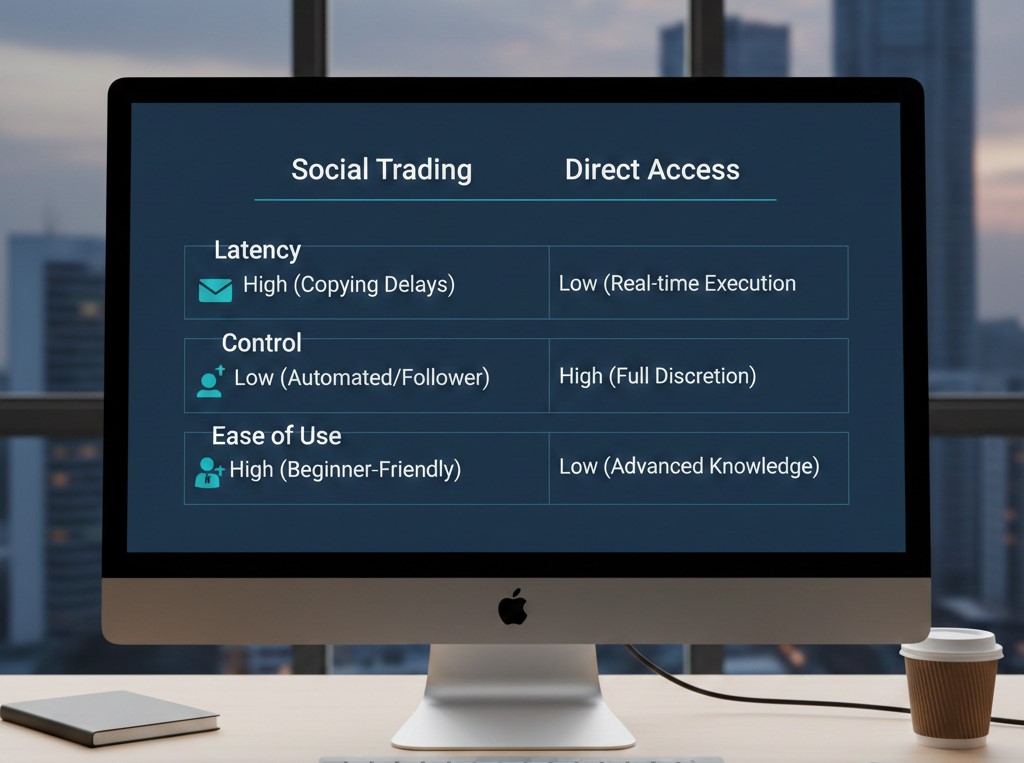
If you have a smaller account and prefer a hands-off approach, a Social Trading Platform is your best bet. The automation justifies the slight slippage.
However, if you are managing significant capital or vetting a fund manager for the long term, direct investor password access is the professional choice. It offers the transparency and security necessary for serious portfolio growth.
FAQs
What is the main difference between social trading and investor password access?
The primary difference is execution automation. Social trading platforms automatically copy trades using middleware. Investor password access provides “read-only” visibility, allowing you to monitor a trader without the platform executing trades for you.
Is it safe to give my investor password to a signal provider?
Yes, it is entirely safe. An investor password allows others to view your account but prevents them from trading or withdrawing money. Never share your “Master Password,” as that provides full account control.
Does social trading cause more slippage than direct access?
Yes, typically it does. Because social trading requires data to pass through a third-party platform server before reaching your broker, the resulting latency often leads to execution slippage and lower profits.
Can I use an investor password for copy trading?
Only for the lead account. A copy trading bot can “read” signals from a master account via an investor password. However, your own account must be connected via a Master Password or API to execute those trades.
Which is better for beginners?
Social Trading Platforms are better for beginners. They simplify risk management and lot sizing. Investor password access is a tool for advanced traders who want to audit performance before committing to a strategy.
Connect on Telegram Don’t miss out on critical market updates. Join my Telegram community for the latest news and trading signals delivered straight to your phone: https://t.me/mql5signals_Sarowar
