

You want exposure to forex markets. But you don’t have time to trade daily.
Maybe you’ve tried trading yourself. The results were inconsistent. Drawdowns were stressful. Returns didn’t justify the screen time.
Hiring a professional forex trader to manage your account seems logical. The problem? Risk, scams, unrealistic promises, and legal confusion.
This article shows you how it actually works — with risk-first logic, not hype.
What Does a Professional Forex Trader Do When Managing Your Account?
A real account manager does more than place trades.
They control risk, structure execution, and protect capital under strict rules.
Trade Execution vs Strategy Design
A professional trader:
- Develops a structured trading system
- Uses predefined entry and exit rules
- Follows a risk-to-reward ratio
- Avoids impulsive decisions
Execution often happens through platforms like MetaTrader 4 or MetaTrader 5.
Risk Management and Position Sizing
This is where professionals differ from retail traders.
They define:
- Maximum drawdown limits
- Risk per trade (often 0.5–2%)
- Stop-loss placement
- Exposure limits during volatility
Leverage is controlled. It’s not abused.
Performance Reporting and Transparency
You should receive:
- Monthly performance reports
- Equity curve tracking
- Maximum drawdown data
- Risk metrics
Verified results via Myfxbook or FX Blue are essential.
Platform and Broker Integration
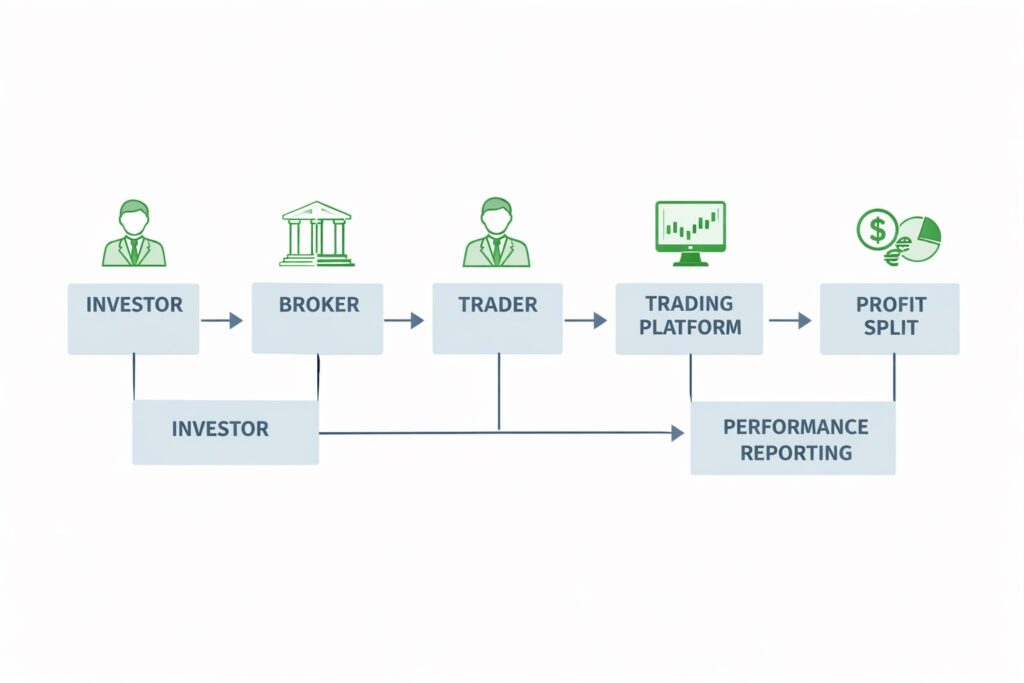
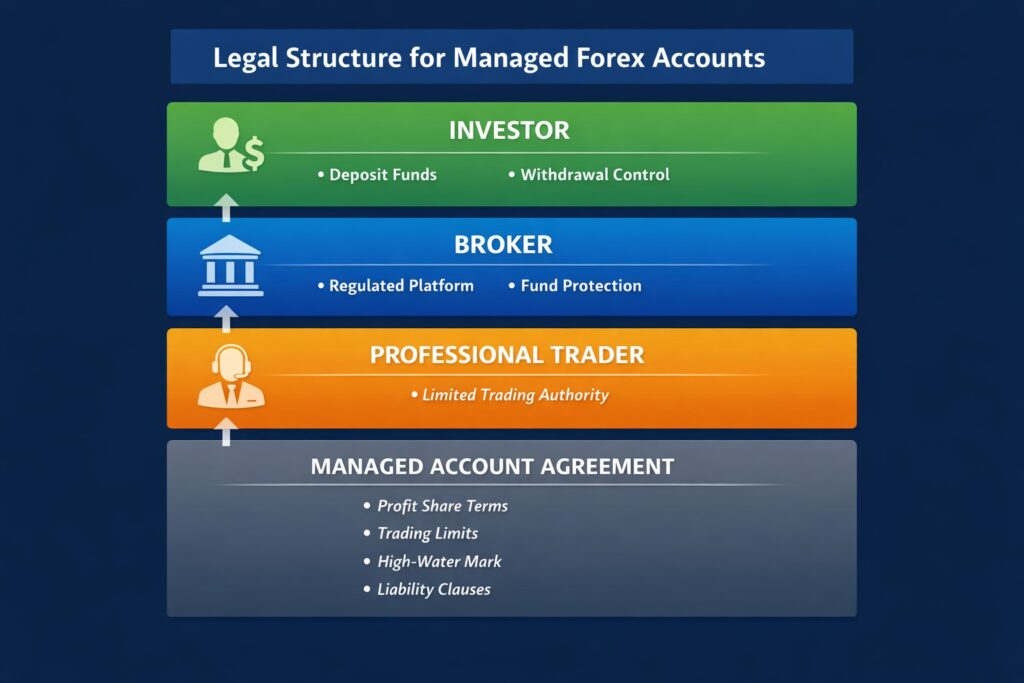
The structure usually works like this:
You deposit funds with a broker.
The trader receives limited trading access.
You retain withdrawal control.
Is It Safe to Hire a Professional Forex Trader?
Yes — if specific safeguards are in place.
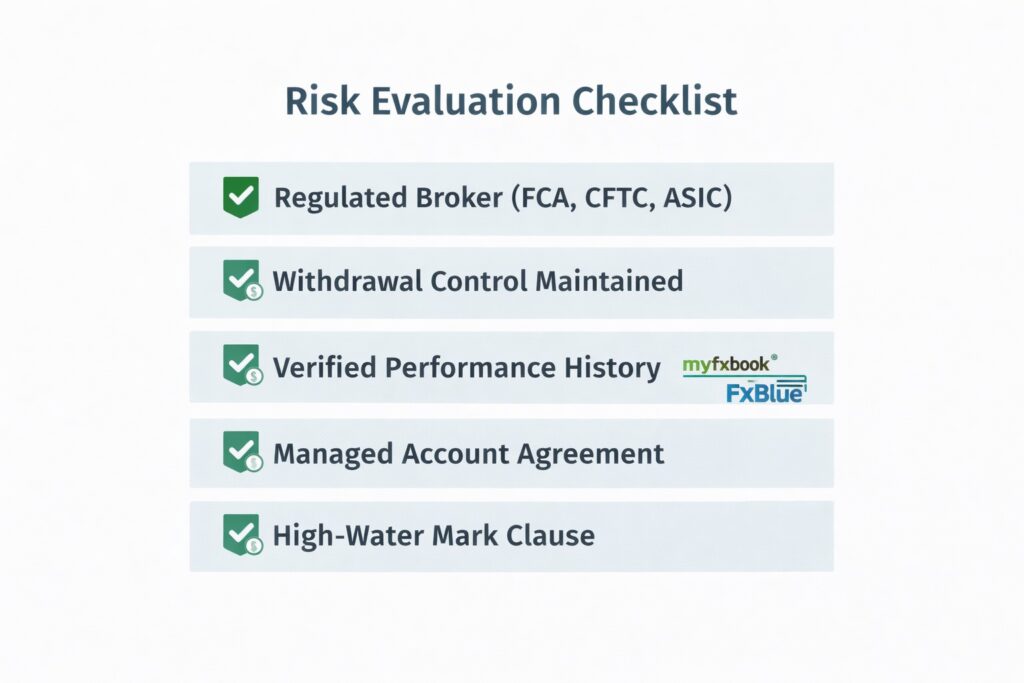
Safety Checklist
- The broker is regulated by authorities like the Financial Conduct Authority or U.S. Commodity Futures Trading Commission
- You maintain full withdrawal control
- The trader provides a verified track record
- A managed account agreement is signed
- A high-water mark clause protects you
If any of these are missing, walk away.
Regulation and Jurisdiction Matters
Regulated brokers provide:
- Segregated client funds
- Reporting transparency
- Dispute resolution frameworks
Unregulated offshore setups increase risk.
Withdrawal Control Safeguards
In legitimate setups:
- Traders cannot withdraw funds
- They only execute trades
- You control deposits and withdrawals
Confirm this with your broker before granting access.
Performance Verification
Ask for:
- At least 12 months of data
- Maximum drawdown history
- Risk-adjusted metrics
Screenshots are not proof. Third-party verification is.
PAMM vs MAM vs Copy Trading — Which Model Is Best?
Different structures suit different investors.
PAMM Accounts
- Profits distributed proportionally
- Funds pooled
- Simpler structure
MAM Accounts
- Individual trade allocation
- Flexible lot sizing
- Greater customization
Copy Trading
- Automated mirroring of trades
- Less oversight
- Platform-dependent (e.g., cTrader)
Here’s a structural comparison:
| Feature | PAMM | MAM |
|---|---|---|
| Trade Allocation | Proportional | Customizable |
| Risk Flexibility | Limited | High |
| Transparency | Moderate | High |
| Investor Control | Lower | Higher |
Choose based on flexibility and control preference.
What Is a Realistic Return from a Managed Forex Account?
Let’s remove fantasy from the discussion.
Industry Benchmarks
A realistic monthly return:
- 3–8% with controlled drawdown
- 10–20% annual return with capital preservation
- Maximum drawdown under 20%
Anything promising 20% monthly is high risk.
Risk-Adjusted Metrics Matter
Evaluate:
- Sharpe ratio
- Maximum drawdown
- Consistency of returns
- Equity curve smoothness
ROI alone means nothing without context.
Compounding Example
Even 5% monthly can significantly grow capital over time — if drawdown is controlled.
How to Choose the Right Forex Account Manager
This is where most investors fail.
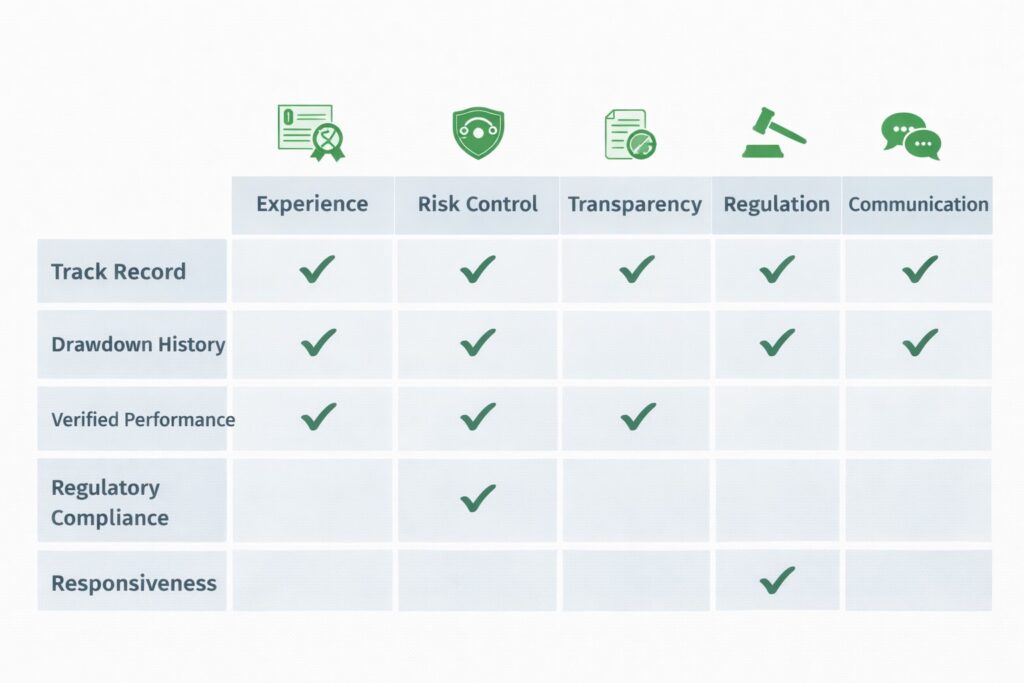
Questions to Ask
- What is your maximum historical drawdown?
- How do you control leverage?
- Is your performance verified?
- What is your risk per trade?
Red Flags
- Guaranteed returns
- No third-party verification
- Pressure to deposit quickly
- Unrealistic win rates
Track Record Verification
Look for:
- Myfxbook verified accounts
- Consistent performance over 12+ months
- Transparent losing periods
Legal Structure & Investor Protection
You need structure, not verbal promises.
Managed Account Agreement
This document defines:
- Trading authority scope
- Profit split percentage
- Liability clauses
- Termination rights
Profit Split Model
Most managers operate on:
- 20–50% performance fee
- High-water mark protection
- No upfront fixed fees
Regulatory Context
Regulation under bodies like the Australian Securities and Investments Commission or the CFTC increases transparency.
Avoid unregulated offshore managers offering “guaranteed profits.”
How Risk Management Protects Your Capital
This is the core difference between professionals and amateurs.
Maximum Acceptable Drawdown
Professionals define loss tolerance before trading begins.
Example:
- 15% max drawdown trigger
- Trading stops if breached
Risk Per Trade Formula
Capital × Risk % = Maximum exposure per position.
Example:
$10,000 × 1% = $100 max loss per trade.
Emotional Discipline vs Algorithmic Trading
Retail traders often overtrade.
Professionals may use:
- Strict discretionary frameworks
- Or algorithmic systems with predefined rules
Volatility is managed, not chased.
Should You Hire a Professional Forex Trader or Trade Yourself?
This depends on three factors.
Time Commitment
Active trading requires daily monitoring.
Managed accounts require periodic oversight only.
Psychological Factors
Forex markets test emotional discipline.
If you struggle with revenge trading, outsourcing may help.
Cost vs Opportunity
Yes, profit sharing reduces your net gain.
But inconsistent self-trading may cost more long term.
Hiring makes sense if:
- You have capital
- You lack time
- You value risk control
It doesn’t make sense if you want full control and enjoy active trading.
FAQ: Professional Forex Trader to Manage Account
Is it safe to hire a professional forex trader?
Yes, if the trader uses a regulated broker, provides verified performance, signs a formal agreement, and does not control withdrawals.
Safety depends on structure. Always verify regulation, performance history, and withdrawal rights before granting trading access.
How much does a forex account manager charge?
Most charge 20–50% of profits under a high-water mark model, with no upfront fees.
This aligns incentives. The manager earns only when you profit. Avoid fixed monthly fees without performance-based structure.
What is the difference between PAMM and MAM accounts?
PAMM pools investor funds proportionally, while MAM allows flexible trade allocation per investor.
MAM provides more customization. PAMM is simpler but offers less control over risk adjustments.
What is a realistic return from a managed forex account?
A sustainable monthly return is typically 3–8% with controlled drawdown under 20%.
Consistent risk-adjusted performance matters more than high short-term gains. Extreme monthly promises signal excessive leverage.
Can a trader withdraw money from my account?
In legitimate setups, traders cannot withdraw funds — only trade them.
Always confirm withdrawal control remains solely with you through your broker before authorizing trading access.
Connect on Telegram Don’t miss out on critical market updates. Join my Telegram community for the latest news and trading signals delivered straight to your phone: https://t.me/mql5signals_Sarowar